Latest Maps Near Virginia Beach
VIMS jellyfish map for today, Virginia Beach
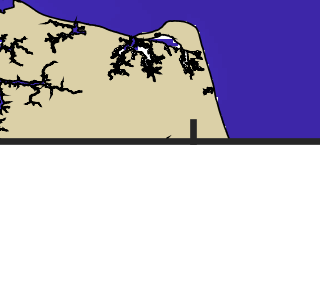
 Low
Low
NOAA James River jellyfish map for today, Virginia Beach
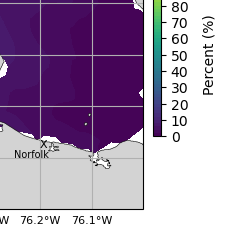
 Low
Low
Recent Trend in Virginia Beach
Jellyfish chances are about the same as yesterday (88%). Over the past week, jellyfish have been thick in this area most days.
Virginia Beach Jellyfish Conditions
For Virginia Beach, jellyfish look heavy today. The highest of the latest NOAA and VIMS model readings is 88%. Tomorrow looks heavy, around 84%. The five-day VIMS outlook looks lower, around 0%.
Jellyfish look more likely here than in many Virginia spots today. Virginia Beach is usually a lower-jellyfish area, but it is still worth checking before swimming. For this page, we check Atlantic Ocean and Chesapeake Bay using VIMS broad map; nearby NOAA James River context; NOAA regional pages have weak/no direct coverage.
Popular beach and water-access searches around Virginia Beach include Virginia Beach Oceanfront, Chesapeake Beach, First Landing State Park Beach, and Sandbridge Beach. People often check this page for searches like Virginia Beach jellyfish report, Virginia Beach Oceanfront jellyfish, and Atlantic Ocean and Chesapeake Bay jellyfish conditions.
Popular Beaches and Water Access in Virginia Beach
- Virginia Beach Oceanfront Light on Atlantic Ocean: Main resort-area oceanfront with beaches, boardwalk, hotels, restaurants, and the highest search volume in the city. Official info.
- Chesapeake Beach Heavy on Chesapeake Bay: Bay-side Virginia Beach shoreline, also known locally around Chic's Beach, with calmer Chesapeake Bay water than the oceanfront. Official info.
- First Landing State Park Beach Heavy on Chesapeake Bay: State park with 1.5 miles of sandy Chesapeake Bay beach and extensive trails near the mouth of the bay. Official info.
- Sandbridge Beach Light on Atlantic Ocean: Quieter southern Virginia Beach oceanfront with roughly five miles of dunes and residential beach access. Official info.
Nearby Jellyfish Reports
If you are deciding where to go, these nearby Virginia reports are worth checking too.
- Norfolk jellyfish report
- Hampton jellyfish report
- Chesapeake jellyfish report
- Northampton County jellyfish report
The maps above are the latest VIMS and NOAA guidance we have for this area. We save each day's reading so this report can get more useful over time.
About Atlantic Ocean jellyfish
The Virginia Beach oceanfront on the Atlantic is a different setting from the bay, and sea nettles are less common there than in the Chesapeake. You may occasionally see other species, and rarely a Portuguese man o' war pushed in by wind and currents. The bay-focused forecast is less meaningful on the open ocean.
Beach Bag Sting Kit
A few simple items make a jellyfish sting easier to handle and less likely in the first place. We haven't lab-tested these ourselves — these are the picks that came out on top when we compared reviews, reputations, and Amazon track records. Here is what we suggest keeping in the beach bag during sea nettle season.
-
Sting relief gel
After Bite Xtra is the pharmacist-recommended favorite in sting-treatment roundups, with a gentle diphenhydramine formula for the burn and itch once you are out of the water.
Buy the After Bite Xtra on Amazon -
Small vinegar bottle
There's no jellyfish-specific vinegar bottle out there, so we like a small leak-proof silicone travel bottle (humangear GoToob+) you fill yourself — handy for beaches where local guidance calls for vinegar, though it's not a clear win for bay sea nettles.
Buy the GoToob+ bottle on Amazon -
Rash guard
O'Neill's Basic Skins UPF 50+ long-sleeve is the name that keeps coming up as the reliable no-frills pick for covering skin that sea nettles would otherwise reach — just size up, reviewers say it runs a little small.
Buy the O'Neill Basic Skins rash guard on Amazon Browse more rash guards -
Water shoes
The Speedo Tidal Cruiser is the well-reviewed, widely available pick for keeping feet protected from stings and shells in shallow water. (Speedo discontinued the older Surfwalker Pro 3.0, so this is its current equivalent.)
Buy the Speedo Tidal Cruiser on Amazon Browse more water shoes -
Tweezers and first-aid kit
The Coleman All-Purpose Mini First Aid Kit is a genuine Amazon best-seller with metal tweezers included, small enough to live in a beach bag year-round.
Buy the Coleman mini first-aid kit on Amazon -
Reef-safe sunscreen
Badger's Sport Mineral Sunscreen SPF 40 is a repeat top pick in reef-safe roundups — a simple, non-nano zinc formula with no oxybenzone or octinoxate.
Buy the Badger mineral sunscreen on Amazon -
Waterproof phone pouch
The Hiearcool 2-pack is an Amazon best-seller for a reason — tens of thousands of ratings at 4.6 stars for an IPX8 pouch that still lets you use your touchscreen at the water's edge.
Buy the Hiearcool phone pouch on Amazon -
Beach umbrella
The Sport-Brella Super-Brella is the recurring 'best overall' pick in shade-umbrella roundups, with vents, stakes, and tethers included to help it hold up in a stiff bay breeze.
Buy the Sport-Brella canopy on Amazon
As an Amazon Associate I earn from qualifying purchases. This site may earn a commission from qualifying purchases made through these links, at no extra cost to you.
Virginia Beach Jellyfish FAQ
Are there jellyfish in Virginia Beach today?
Virginia Beach currently shows heavy jellyfish conditions, a 88% chance of encountering stinging jellyfish as of 2026-09-05.
Where can you swim in Virginia Beach?
Popular swimming and water access spots in Virginia Beach include Virginia Beach Oceanfront, Chesapeake Beach, First Landing State Park Beach, and Sandbridge Beach.
When are jellyfish worst in Virginia Beach?
Virginia Beach is usually a lower-jellyfish area, but it is still worth checking before swimming. In Virginia and the Chesapeake Bay, jellyfish are typically most common from mid-summer through early fall, when the water is warmest.
Source maps are model guidance from VIMS and NOAA/NCCOS. They are useful for a quick beach check, but they do not count jellyfish in the water and may not match conditions at every shoreline. Always check conditions when you arrive: posted lifeguard flags beat any forecast, and a purple flag means dangerous marine life has actually been seen, whatever the model says.